


Self-tapes are now the default audition format for actors and models across the UAE and GCC. Casting directors at production houses, advertising agencies, and brands in Dubai are making booking decisions based almost entirely on what they see in your tape before they ever meet you. That makes the quality of your self-tape one of the most important professional investments you can make right now.
The good news is that a great self-tape does not require a professional studio or expensive equipment. It requires knowing what casting directors are actually looking for and setting yourself up to deliver it consistently.
Here are eight things that make the difference between a tape that gets you called back and one that gets skipped.
1. Read the Brief Before You Do Anything Else
Every self-tape request comes with instructions. Frame size, file format, scene requirements, time limits. The number of talented actors and models who get rejected before anyone watches a second of their performance because they did not follow the brief is significant.
Reading and following instructions precisely signals to a casting director that you can take direction on set. A professional who cannot follow a submission brief is not a professional a director wants to manage through a shoot day. Start there.
2. Use a Background That Disappears
Your background should not communicate anything. Plain, light-coloured walls work best. A clean grey, white, or soft neutral colour keeps the focus on you, which is the entire point of the exercise.
Avoid bookshelves, busy wallpaper, windows with outdoor distractions, or anything that gives a casting director something to look at other than your performance. If your space does not have a suitable wall, a plain bedsheet or an inexpensive photography backdrop solves the problem immediately.
3. Get Your Lighting Right Before You Press Record
Poor lighting is the fastest way to make a professional performance look amateur. Natural light from a window can work well, but it changes throughout the day and can create harsh shadows depending on your position relative to the window.
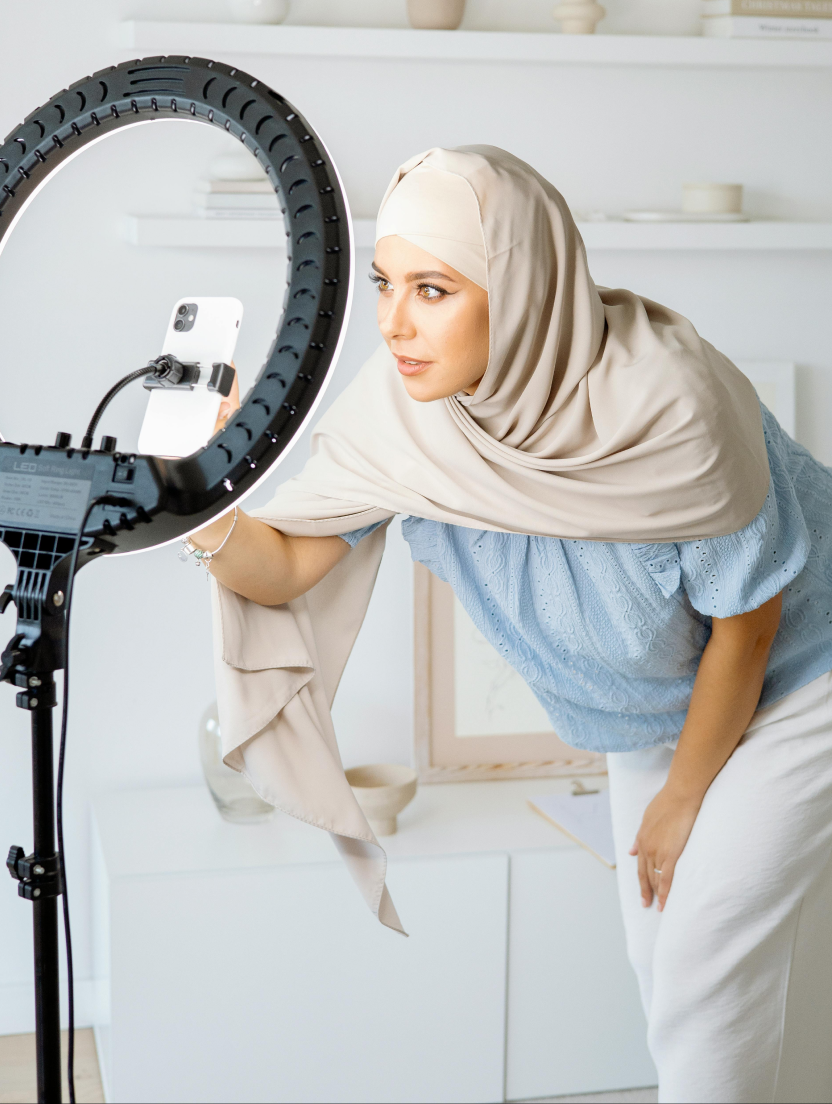
Two softbox lights or LED ring lights placed at 45-degree angles to your face produce the consistent, even lighting that makes casting directors comfortable watching your tape. The goal is a well-lit face with no distracting shadows. MasterClass outlines the standard self-tape setup clearly, including how to frame the shot and where to place your eyeline marks relative to the lens.
4. Treat Audio as Non-Negotiable
If a casting director cannot hear you clearly, the rest of the tape is irrelevant. Built-in phone microphones can work in a completely quiet room, but most rooms are not completely quiet. An affordable lapel microphone or shotgun mic attached to your phone or camera removes the risk entirely and costs less than a single day's work at entry-level rates.
Test your audio before every session. Listen back through headphones, not your phone speaker. Background noise from air conditioning, a fan, or outdoor traffic that you stop noticing in the room becomes the loudest thing in a recording.
5. Frame the Shot Correctly for the Role
For acting and commercial self-tapes, a medium close-up capturing from chest to just above the head is the standard framing. For full-body modelling tapes, you need to show your complete frame with appropriate headroom. The casting brief will usually specify if something different is required.
Film in landscape orientation, not portrait, unless the brief specifically says otherwise. Position the camera at eye level, not looking up at you from a table or down from a shelf. Eye-level framing reads as professional and is what casting directors are expecting to see.
6. Dress for the Brief, Not for the Mirror
Your clothing should match the role or the casting direction, not what you feel most comfortable or attractive in. Solid, fitted colours work best for most commercial and acting tapes. Blue, grey, and black read cleanly on camera. Busy patterns, logos, and bright whites can create problems depending on your setup.
For modelling tapes where body awareness matters, fitted clothing that allows your frame to read clearly is appropriate. For acting roles, choose something that suggests the character's world without going into full costume. The distinction matters more than most new talent realises.
7. Record Multiple Takes and Choose Objectively
Film two to four takes and select the strongest one before you submit. Over-rehearsing to the point of mechanical delivery is a real risk, particularly for actors who are new to the self-tape format. The goal is consistent, authentic performance, not technical perfection.
Watch your takes back on a screen, not just your phone. Note whether your eyes are alive, whether your listening is genuine between your own lines, and whether the energy of the performance matches what the brief is asking for. Choose based on what a casting director would respond to, not which take made you feel most comfortable.
8. Submit on Time, Labelled Correctly, in the Right Format
Late submissions are often not watched at all, regardless of quality. Casting directors working to production timelines do not wait for talent who cannot meet a deadline.
Label your files clearly: YourName_Role_ProjectName_SelfTape in the file format specified in the brief, usually MP4. If no format is specified, MP4 at a reasonable file size is standard. Submit through the channel specified in the brief, not via WhatsApp unless that is what was asked for.
How Thrilla Connects Self-Tape to Actual Bookings in the UAE and GCC
Knowing how to create a strong self-tape is one part of building a professional acting or modelling career in the UAE. The other part is making sure the right people see it.
Thrilla is the GCC's first AI-native creative talent marketplace, built specifically for actors, models, and creative professionals across the UAE and wider GCC. Founded in Dubai in 2025 by Jack Deakin, Jason Murphy, and Billie Van Der Veen, the platform was built from direct experience of how the industry operates and where it fails the talent working inside it.
According to Thrilla's survey of over 5,000 UAE creative professionals, 75% have waited six months or more to get paid, more than once. A self-tape that books you a job should lead to a booking that pays you properly and on time. Thrilla structures clear payment terms at the point of every booking so that the professional standards that go into your tape extend to the professional standards of how the work is compensated.
Join Thrilla as a talent and get your verified profile in front of casting directors, brands, and production houses across the UAE and GCC who are actively looking for actors and models right now. Post a casting brief on Thrilla and connect with verified professional talent whose profiles, portfolios, and track records are documented and ready to review.